Apple’s Upcoming iOS 26, iPadOS 26, and macOS 26
Apple has introduced iOS 26, iPadOS 26, and macOS 26, marking a significant transformation in its software ecosystem. Announced at WWDC 2025, these operating systems feature a unified design language, deeper AI integration, and enhanced cross-device functionality. The shift to version “26” indicates a new year-based naming convention, emphasizing a complete redesign rather than incremental updates. The goal is to create a seamless ecosystem across all devices, combining aesthetics, intelligence, and performance.
Read Also more about the Rate of Mobiles Visit The Article: Samsung Mobile Phone Price in Pakistan
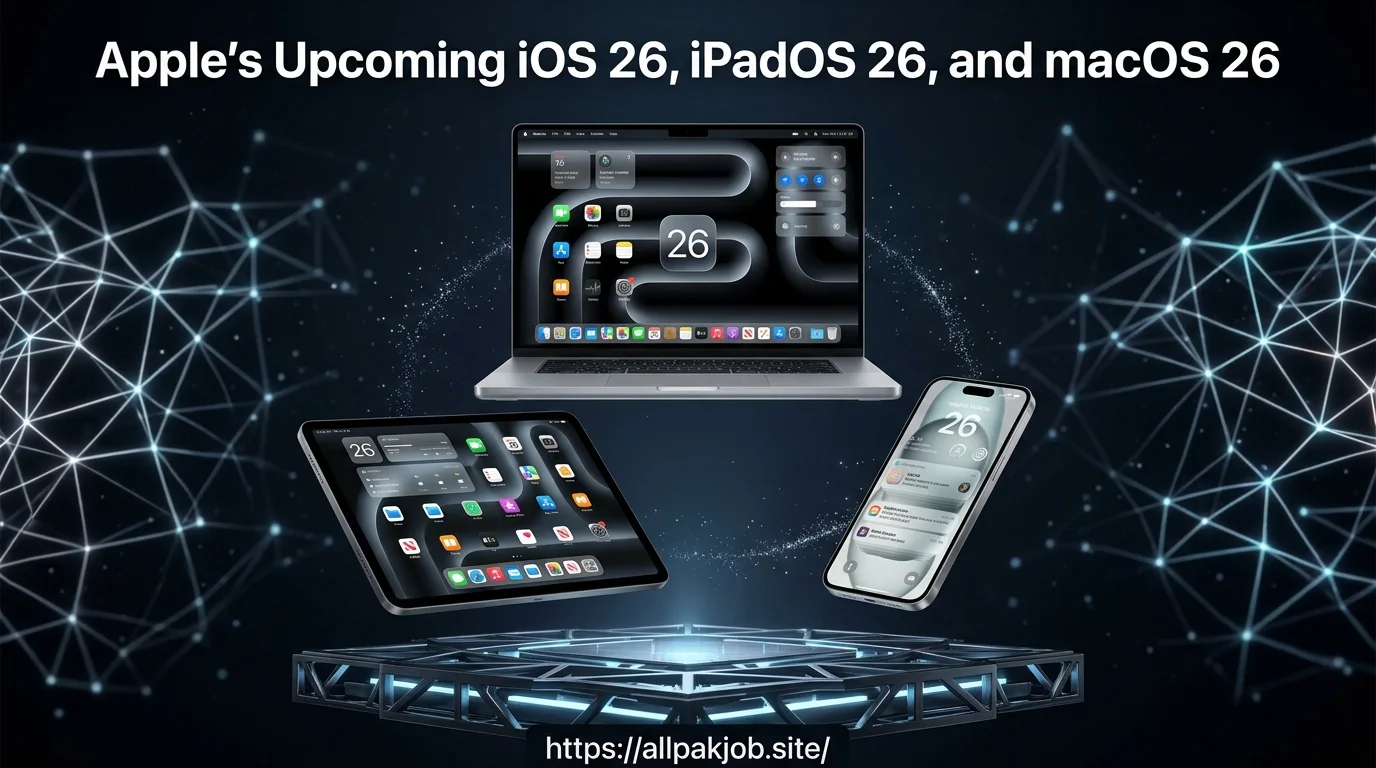
A Unified Design: The “Liquid Glass” Revolution
One of the most striking changes across all three operating systems is the introduction of the “Liquid Glass” design language.
- Transparent, glass-like UI elements
- Dynamic reflections and depth effects
- Consistent design across devices
This is Apple’s biggest visual overhaul since iOS 7, emphasizing fluidity and realism.
The design extends to:
- Lock screens and home screens
- App icons with customizable styles
- Control centers and system menus
The goal is to deliver a visually immersive and cohesive user experience across all Apple platforms.
iOS 26: Smarter, More Personal iPhone Experience
Key Features
- Enhanced Apple Intelligence (AI)
- Live translation in calls, messages, and FaceTime
- Visual intelligence for on-screen content
- Integration with third-party AI tools
- Redesigned Interface
- Vibrant lock screen with 3D effects
- New customizable icons and layouts
- Improved control center
- Improved Apps and Features
- Call screening and hold assist
- Smarter Camera and Photos apps
- New Apple Games app
- Performance and Security
- Adaptive power mode for better battery life
- Advanced privacy controls
- Recovery Assistant for troubleshooting
These updates make iOS 26 more intuitive, efficient, and intelligent for everyday use.
Read Also: Global AI Investments & Infrastructure
iPadOS 26: Redefining Productivity
iPadOS 26 transforms the iPad into a more powerful productivity tool, bridging the gap between tablets and laptops.
Major Enhancements
- New Windowing System
- Freely resizable apps
- Mac-like controls (minimize, maximize, close)
- Advanced multitasking capabilities
- Desktop-Class Experience
- Menu bar similar to macOS
- Improved file and app management
- Creative and Productivity Tools
- Preview app introduced on iPad
- Enhanced Notes and Calculator features
- Support for Apple Pencil workflows
- Design & AI Integration
- Liquid Glass UI
- Live translation and smart automation
This update positions the iPad as a serious alternative to traditional computers.
macOS 26 (Tahoe): Power Meets Intelligence
macOS 26, often referred to as “Tahoe,” continues Apple’s focus on performance, productivity, and intelligent computing.
Key Highlights
- Improved Spotlight Search
- Faster, smarter, and more contextual
- Enhanced AI Integration
- Apple Intelligence features across apps
- Better automation and workflow assistance
- Unified Design
- Liquid Glass interface across the desktop
- Consistency with iOS and iPadOS
- Cross-Device Continuity
- Seamless interaction between Mac, iPhone, and iPad
- Shared workflows and data synchronization
macOS 26 enhances professional workflows while maintaining Apple’s signature simplicity.
AI Integration: The Core of Apple’s Strategy
A central theme across all platforms is Apple Intelligence, Apple’s AI ecosystem.
Key capabilities include:
- Real-time language translation
- Context-aware assistance
- Visual recognition and interaction
- Integration with apps and system tools
Apple is positioning AI as a practical everyday assistant, rather than just a futuristic feature.
Challenges and Criticism
Despite the innovations, these updates have faced some criticism:
- Usability concerns with the new design
- Performance and battery issues reported by users
- Limited availability of advanced AI features on older devices
Some expected AI upgrades, such as a more advanced Siri, have also been delayed.
Future Outlook
Apple’s OS 26 lineup sets the foundation for:
- Deeper AI integration in future updates
- More powerful cross-device ecosystems
- Continued design refinement
Future versions (like iOS 27) are expected to enhance AI capabilities and system performance further.
Conclusion
Apple’s iOS 26, iPadOS 26, and macOS 26 represent a bold step forward in software design and functionality. By combining a unified visual identity with advanced AI features, Apple is redefining how users interact with their devices.
While challenges remain—particularly in performance and feature rollout—the overall direction signals a future where devices are smarter, more connected, and increasingly intuitive.
These updates are not just upgrades—they are the foundation of Apple’s next-generation ecosystem.
FAQs
What is the biggest change in iOS 26, iPadOS 26, and macOS 26?
The biggest change is the Liquid Glass design, which introduces a unified and visually dynamic interface across all Apple devices.
What is Apple Intelligence?
Apple Intelligence is Apple’s AI system that enables features like live translation, smart assistance, and visual recognition.
When were these operating systems released?
They were announced at WWDC 2025 and officially released in September 2025 for supported devices.